Education & Popularization
- Home
- Education & Popularization
Education & Popularization
The SRC through its Information Services Division (ISD), remained steadfast in its commitment to fulfilling the mandate of popularizing Science and Technology (S&T). The Division consist of four units. These units, namely Science and Technology Education (STEU), Publication, Community Development, and Science Resource Centre, collectively worked towards promoting the widespread adoption and understanding of S&T. By disseminating knowledge, engaging communities, and providing valuable resources, the SRC continues to empower individuals and promote a greater understanding and appreciation of S&T among the public.
Science & Technology Education Unit (STEU)
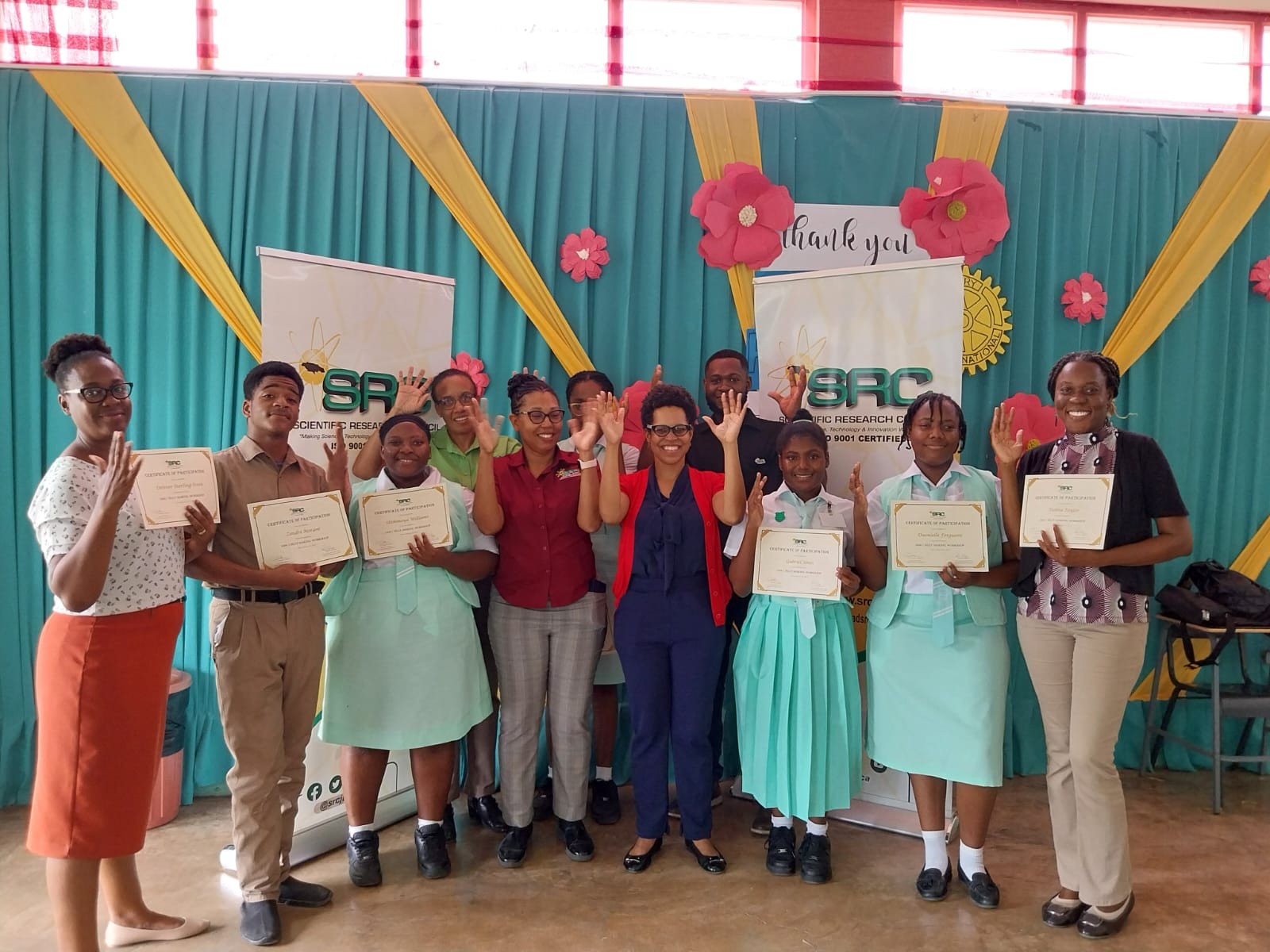
The Science & Technology Education Unit (STEU) is the schools’ public education arm of the Scientific Research Council, with a general mission to promote the interest, awareness and understanding of Science & Technology among our school population. Its activities are geared at: contributing to a higher number of students qualified and literate in Science & Technology, increasing the number of graduates entering careers in Science and Technology and to providing teachers with first-hand experience of industry examples of Science and Technology at work, which will improve their delivery in the classroom.
STEU, for the past three decades, has driven the country’s thrust of scientific awareness and application by building and strengthening capacities in the areas of Science, Technology and Innovation, specifically Science Education, as an enabler for poverty reduction, growth and socio-economic development. The launching of the Schools’ Science & Technology Societies (science clubs) in 1996 created the pathway by which students could engage in various activities such as The Science and Technology National essay, oratory, poster and performing arts competition, the Young Inventors/Innovators competition, the STEM Ambassadors program, STEM Virtual Experiment Series, Science Summer camps and the Conversations in Science Series. These activities seek to strengthen their understanding of science & technology in an informal yet stimulating manner.
These programs are made possible through collaborative networks established across companies and the support of other stakeholders such as the European Union, Digicel Foundation, Food for the Poor Jamaica, American Friends of Jamaica and Caribbean Broilers. Their assistance led to the implementation of several capacity building projects such as the establishment of a bio-digester system and a piggery unit at the Carron Hall High School in St. Mary.


Our stakeholders include mainly:
The Association of Science Teachers of Jamaica (ASTJ)
The Ministry of Education
Public & Private Sector Bodies
Research & Development of a Natural Pesticide from various natural products
The objectives of the Science and Education Unit are:
To increase the attractiveness of ST&I to students
To increase the number of graduates entering careers in ST&I
To foster curiosity and interest in science among primary/prep school students
To contribute to higher numbers of students qualified and literate in ST&I
To equip teachers with resources to better teach science through professional development programmes
To provide teachers with first-hand experience of industry examples of ST&I at work, which will improve their delivery in the classroom.
Science Resource Centre
Our Science Resource Centre is Jamaica’s only public scientific library dedicated to serving researchers, students, entrepreneurs, and the general public. It is a central repository of Science, Technology, and Innovation (ST&I) information, offering access to a wide range of resources on topics of national and global relevance.
The Centre actively disseminates information on scientific issues of topical interest and national importance and responds to information requests from a diverse clientele. Whether you’re conducting academic research, developing a new product, or exploring scientific trends, our knowledgeable team is here to assist.
The Centre is also featured on JAMCAT Jamaica’s Shared Library Catalogue; and utilizes KOHA and the Online Public Access Catalogue (OPAC) platform to provide digital access to its collection. Through KOHA, users can easily search and browse a wealth of scientific research papers, technical documents, and publications curated by the SRC.
Additionally, the Science Resource Centre offers meeting spaces available for short- or long-term rental. These are ideal for entrepreneurs, researchers, and start-up teams who need a professional and resource-rich environment to develop their ideas or host collaborative sessions.
Opening Hours: Monday – Thursday: 8:30 a.m. – 5:00 p.m. Friday: 8:30 a.m. – 4:00 p.m.
Access is open to all members of the public engaged in research and innovation.
Publications Unit
The Scientific Research Council (SRC) remains committed to advancing scientific knowledge and promoting public understanding of science and technology through its key publications. These include the Jamaican Journal of Science and Technology (JJST) and Discovery Magazine, each tailored to serve different audiences while reflecting the Council’s mandate to foster research, innovation, and science communication in Jamaica.
The Jamaican Journal of Science and Technology (JJST), published since 1990, is a continuation of the Journal of the Scientific Research Council of Jamaica. It is a peer-reviewed academic journal that provides a platform for the publication of original research papers, review articles, and scientific commentary. The journal accepts contributions in a wide range of disciplines, including natural sciences, geology, agriculture, computer science, and environmental research. Only original contributions written in English are considered, and accepted articles are published electronically on the SRC’s website as they become available.
As the only public agency in Jamaica mandated to coordinate and promote scientific research, the SRC ensures that the JJST upholds high academic standards and serves as a vital resource for academics, researchers, policy-makers, and science professionals. The journal also features abstracts, book reviews, research in progress, notes and correspondence, and profiles of scientists and technologists. While the readership is more specialized and focused on the academic and research community, the journal plays a critical role in advancing national development through the dissemination of relevant, research-based knowledge.
In contrast, Discovery Magazine was created to reach a wider, more general audience. Recognizing that many individuals are interested in science but may not engage with traditional academic publications, the SRC conceptualized Discovery as a vibrant, reader-friendly publication that brings science and innovation to life. The magazine presents science and technology through captivating stories that explore the human side of research and highlight the contributions of Jamaican scientists beyond the lab.
Discovery covers a diverse range of topics that resonate with everyday life, including features on cannabis in cosmetics, genetic engineering, science and invention, tissue culture technology, project management, safe food supply, and more. It also showcases initiatives such as the SRC’s STEM Ambassador Programme, STEM careers, and public engagement efforts. While the magazine has a limited print run, digital versions are available on the SRC’s website to ensure broader access and continued public interest.
Together, these two flagship publications reflect the SRC’s commitment to fostering a culture of scientific literacy and innovation, supporting both rigorous academic inquiry and public curiosity about science and technology in Jamaica.
Community Development Unit (CDU)
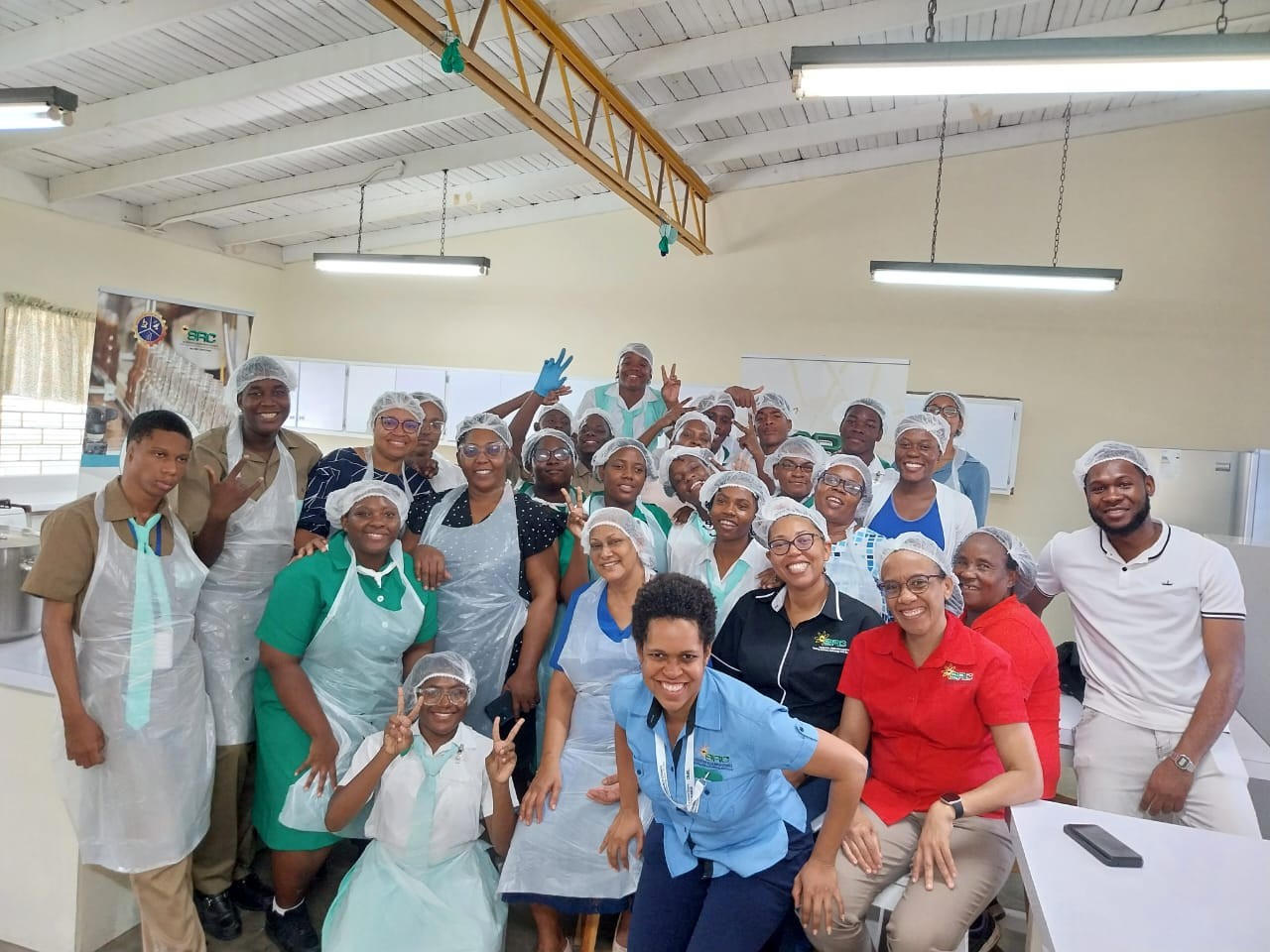
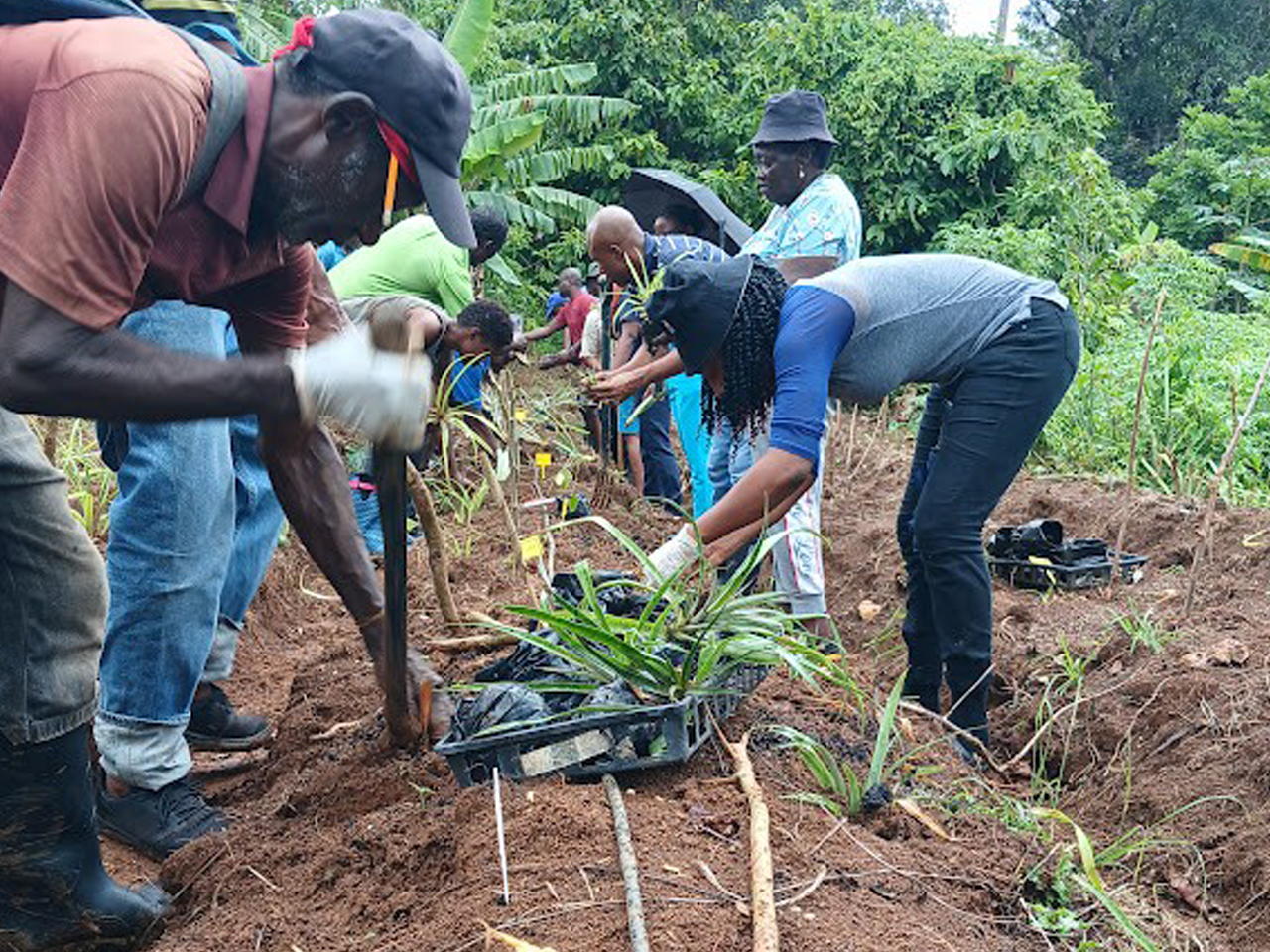
The Scientific Research Council (SRC) through its Community Development Unit (CDU) is committed to fostering sustainable livelihoods across Jamaica by equipping community groups with science-based skills training and technical support. Our mission is to empower local entrepreneurs and organizations to develop high-quality, market-ready products that meet commercial safety and quality standards, enabling them to serve their communities and compete in local, regional, and international markets.
Since its launch in 2015, the SRC’s Community Development Training Programmes have empowered over 500 Jamaicans with hands-on training in agricultural production, agro-processing, and product development. To ensure long-term success, our technical training is complemented by business development and marketing support, equipping participants with the tools needed for sustainable income generation.
These initiatives are delivered in collaboration with key SRC divisions, including:
- Process Development Division (PDD)
- Marketing and Corporate Communications Division (MCCD)
- Product Research and Development Division
- Science, Technology, and Education Unit (STEU)
- Project Management Unit (PMU)
Through strategic partnerships and science-driven solutions, the SRC continues to drive economic resilience, innovation, and community empowerment across Jamaica.
Communities that have benefitted from our Community Development Activities include:
- Jamaica Baptist Union Women’s Federation: Portland
- National Council for Senior Citizens: Kingston
- Lister Mair Gilby School for the Deaf
- Watermount Community Development Committee
- St. Catherine Bee Farmers Association
- St. Catherine Adult Correctional Centre (St Catherine)